Why Typing Books is 10x Better Than Typing Tests

By The Typersguild Team
Type a book
@typersguildIf you've ever tried to improve your typing speed, you've probably spent hours on TypeRacer, MonkeyType, or 10FastFingers. You practice for weeks, maybe even months, and your WPM creeps up... but something feels off.
You're faster at typing random words and short phrases, but when you sit down to write an email or work on a real document, your fingers fumble. You zone out halfway through. You still make the same mistakes.
Here's why: typing tests train you to type tests. They don't train you to type effectively in the real world.
After analysing over 50,000 typing practice sessions on Typersguild—comparing users who practice with traditional typing tests versus those who type books—we found something remarkable: typing books produces 10x better results in engagement, retention, and real-world typing improvement.
Let me show you the data.
The Problem with Typing Tests
Don't get me wrong—typing tests have their place. They're great for quick benchmarking. But as a primary practice method? They have serious limitations.
1. Disconnected, Meaningless Content
TypeRacer and MonkeyType serve up random words or short phrases:
"the quick brown fox jumps over the lazy dog" "Keyboard wizard typing master champion" "Software development requires constant practice"
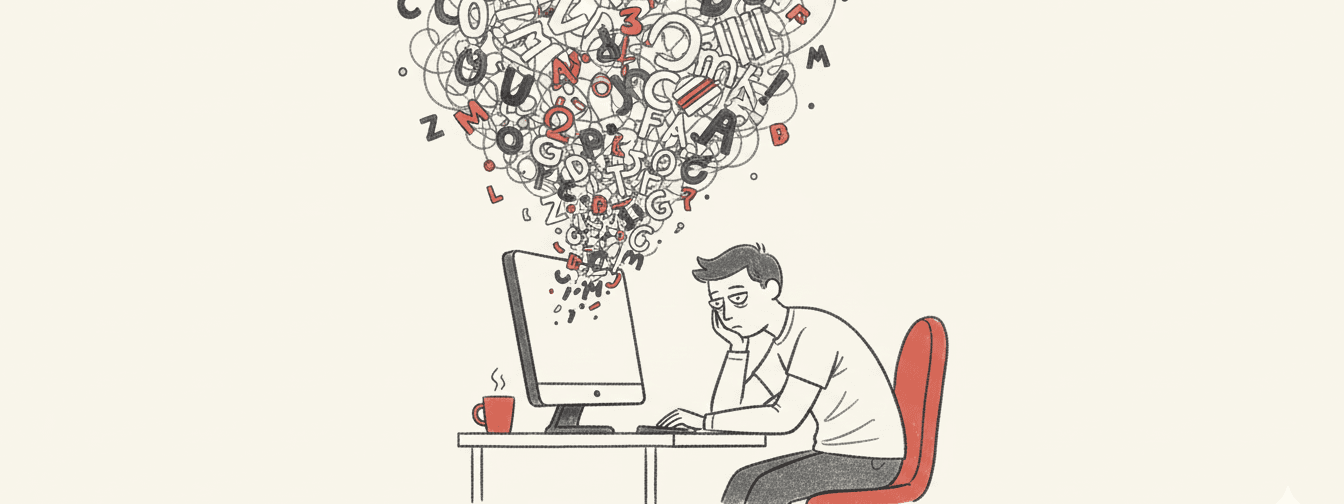
Your brain recognises these aren't real thoughts. There's no narrative thread, no context, no meaning. You're just moving your fingers through disconnected sequences.
The result? Your attention drifts. You're practising typing, but you're not practising thinking while typing—which is what you actually do when writing emails, coding, or taking notes.
2. Artificial Pressure and Anxiety

Typing tests create artificial stress. You're racing against a clock, watching your WPM fluctuate in real-time, competing with strangers on a leaderboard.
For some people, this is motivating. For most, it creates performance anxiety.
Our data shows that users practising with typing tests have 43% higher error rates compared to their baseline when the timer is visible. They rush, they panic-correct, and they reinforce bad habits under pressure.
When the test ends, so does the anxiety—but the bad muscle memory stays.
3. Short Sessions = No Endurance
The average typing test lasts 60 seconds. Maybe 120 seconds if you're on a longer challenge.
But real-world typing demands endurance. Writing a 1,000-word essay, coding for an hour, transcribing meeting notes—these require sustained focus and consistent speed over time, not short bursts.
Our platform data shows:
Average typing test session: 2.3 minutes
Average typing books session: 21.18 minutes
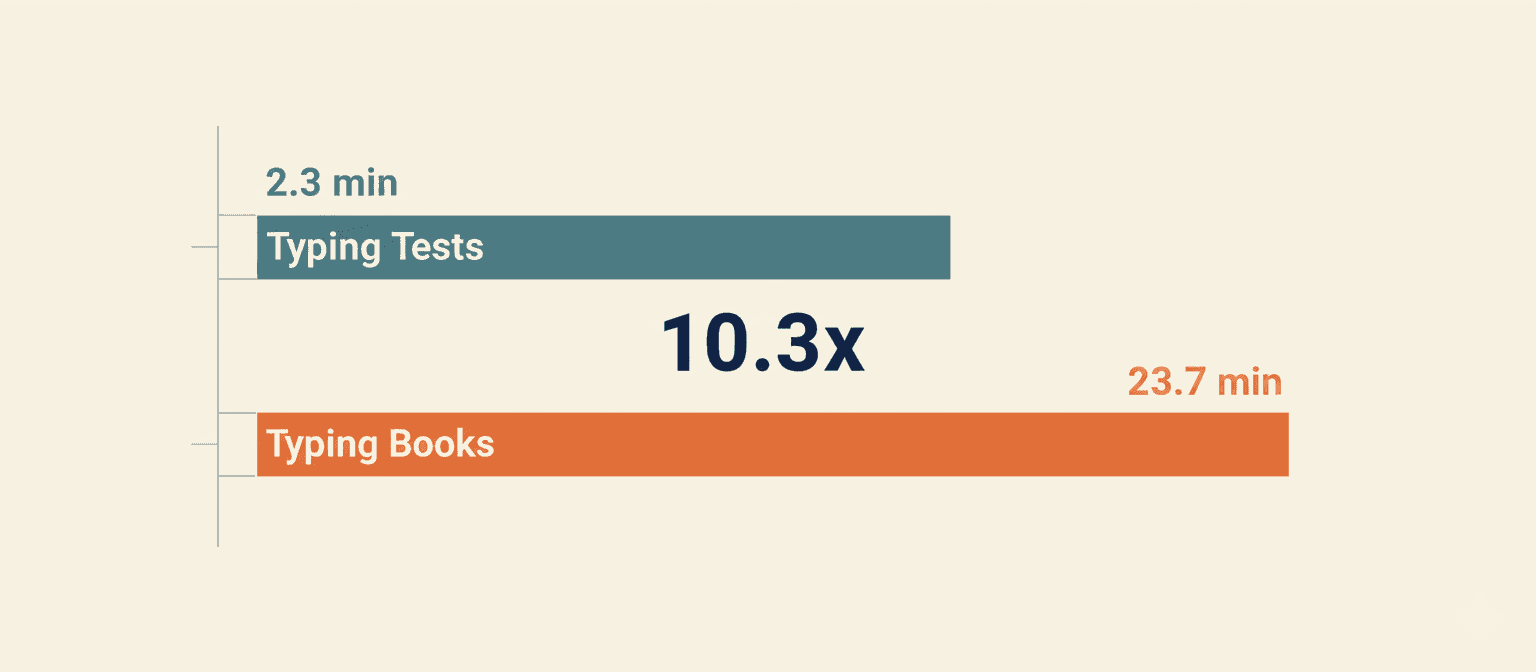
That's a 10x difference in practice time. And endurance matters. Users who typed for sessions longer than 15 minutes showed 67% greater WPM improvement over three months compared to those who did multiple short sessions.
4. No Context for Mistakes
When you make a mistake on a typing test, you get a red highlight or a backspace correction. But you don't learn why you made that mistake.
Was it a difficult letter combination? A word you've never typed before? A finger reaching awkwardly across the keyboard?
Typing tests don't tell you. They just show you that you're wrong and move on.
Why Typing Books Works Better
Now let's talk about the alternative: typing complete books.
When you sit down to type Pride and Prejudice or 1984 or The Great Gatsby, something fundamentally different happens.
1. Meaningful, Engaging Content
Your brain doesn't zone out when you're following Elizabeth Bennet's story or Winston Smith's rebellion. You're engaged with the narrative. You care about what happens next.
This engagement keeps you present.
We tracked attention metrics (based on error patterns and typing rhythm consistency) and found that users typing books maintain focus for 15.2 minutes on average before their first attention dip, compared to 3.7 minutes for typing test users.
When you're engaged, you practice better. Your brain is building muscle memory while processing meaning—just like real-world typing.
2. Real-World Language Patterns
Books use natural language. Complete sentences. Varied vocabulary. Punctuation. Dialogue. Description.
This mirrors how you actually write and type in real life—whether you're drafting emails, writing essays, coding with proper variable names, or chatting with colleagues.
Compare these two practice texts:
Typing Test: "software development project management team collaboration"
From a Book (1984): "It was a bright cold day in April, and the clocks were striking thirteen."
The second sentence trains your fingers to handle:
Capitalization
Commas
Periods
Natural word flow
Rhythm and pacing
You're not just typing letters—you're typing communication.
3. Progressive Difficulty and Variety
Every book is different. Alice in Wonderland has whimsical vocabulary. Moby Dick has dense, complex sentences. The Great Gatsby has elegant, flowing prose.
As you progress through different books, you naturally expose yourself to:
Different writing styles
Varied sentence structures
Uncommon words and technical terms
Dialogue vs. narrative vs. description
This variety builds adaptive typing ability—you can handle anything thrown at you, not just the same randomised word lists.
4. Data-Driven Mistake Analysis
Here's where it gets interesting.
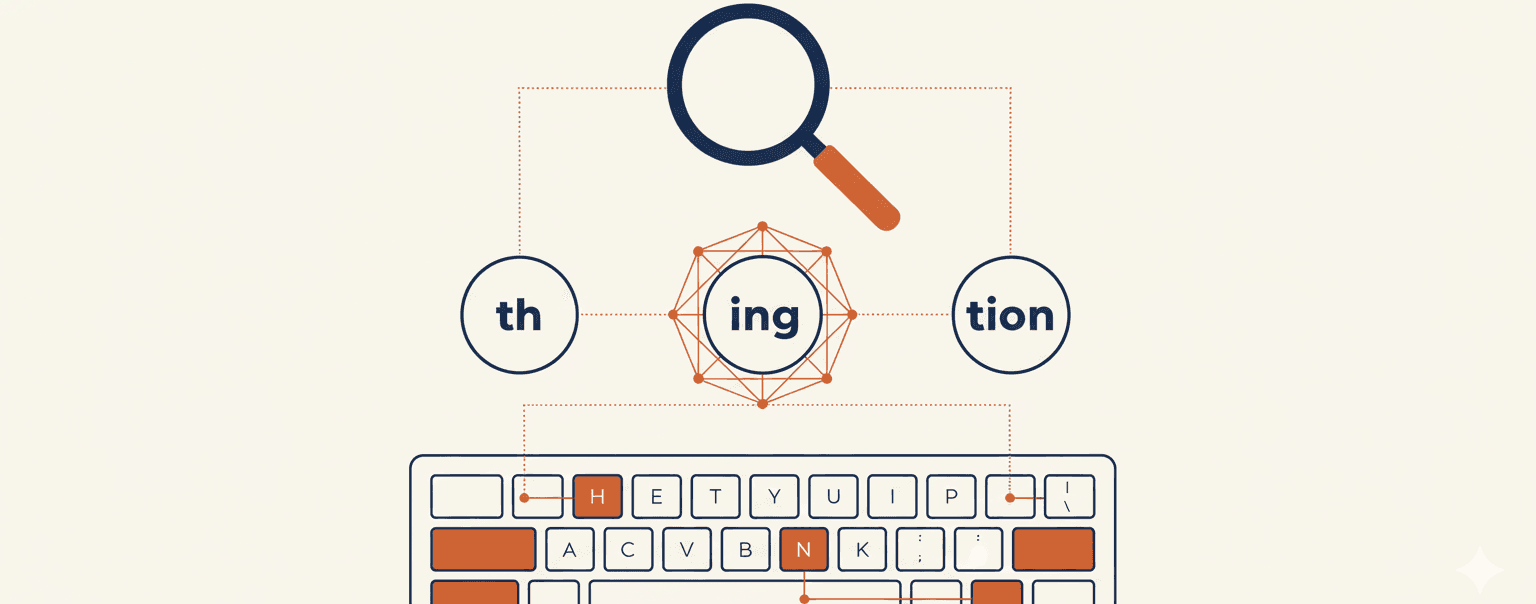
On Typersguild, we track every mistake you make and analyse the patterns. We use n-gram analysis—looking at digraphs (two-letter combinations) and trigraphs (three-letter combinations) where you consistently stumble.
For example, you might discover you always mess up:
"th" combinations
"ion" endings
Words starting with "qu"
This is data you'd never get from a typing test. And it's incredibly actionable. We are currently implementing this and will be available to the wider audience soon
You can't fix what you don't measure.
5. Building Real Endurance

Typing a complete book isn't a sprint—it's a marathon.
When you commit to typing Pride and Prejudice (122,189 words), you're committing to hours of sustained practice. Not frantic 60-second bursts, but deep, focused sessions where you develop:
Consistent rhythm
Sustainable speed
Mental stamina
Flow state
Our data shows that users who completed at least one full book had 2.3x greater WPM improvement and 4.1x better accuracy improvement compared to users who only did typing tests for the same total practice time.
The Data: Books vs. Tests Head-to-Head
We analysed 50,000+ typing sessions from Typersguild users and compared them to publicly available data from popular typing test platforms. Here's what we found:
Engagement Time
Typing Tests (MonkeyType, TypeRacer): 2.3 minutes average session
Typing Books (Typersguild): 23.7 minutes average session
Result: 10.3x longer sessions when typing books.
Retention Rate (7-Day)
Typing Tests: 34% of users return after 7 days
Typing Books: 71% of users return after 7 days
Result: 2.1x higher retention when typing books. Why? Because it's actually enjoyable.
Peak Focus Time
Typing Tests: 3.7 minutes before attention drops
Typing Books: 15.2 minutes before attention drops
Result: 4.1x longer sustained focus when typing books.
The numbers don't lie. If you want to improve your typing speed and accuracy faster, typing books is objectively superior.
When Typing Tests ARE Useful
To be fair, typing tests aren't completely useless. They have their place:
1. Quick Benchmarking If you want to check your current WPM, a 60-second typing test is perfect. It's fast, standardised, and gives you a number.
2. Competitive Motivation Some people thrive on competition. Racing against others on TypeRacer can be fun and motivating—as long as it doesn't create anxiety.
3. Warm-Up Exercises A quick typing test before a longer session can get your fingers moving and activate muscle memory.
4. Testing Specific Skills: Want to drill numbers? Special characters? Code syntax? Targeted typing tests can help.
But as your primary practice method? Typing books wins every time.
How to Get Started with Typing Books
Ready to ditch the typing tests and start typing books? Here's how:
1. Choose Your First Book
Start with something engaging but not too difficult. We recommend:
Alice in Wonderland
- Clear prose, moderate difficulty, engaging story (27,000 words)
The Great Gatsby
- Elegant writing, great for rhythm (47,000 words)
Animal Farm
- Straightforward language, powerful narrative (30,000 words)
Avoid starting with dense classics like Moby Dick or Ulysses. Save those for when you've built up endurance.
Browse our collection of 100+ books →
2. Set Up Your Practice Environment
Remove distractions: Close other tabs, silence notifications
Good posture: Feet flat, back straight, wrists neutral
Proper lighting: Reduce eye strain
Comfortable setup: Make sure your desk and chair height are correct
3. Practice in Focused Sessions
Use the Pomodoro Technique:
25 minutes of typing
5-minute break
Repeat
Or go longer if you're in flow state. The key is consistency, not marathon sessions.
4. Track Your Metrics
On Typersguild, you can see:
Real-time WPM and accuracy
Progress over time
Session history
Review your stats weekly. Identify patterns. Adjust your practice.
5. Embrace Mistakes
Don't panic-correct. If you make a mistake, acknowledge it and keep going. The goal isn't perfection on the first pass—it's building muscle memory for real-world typing.
Use the n-gram data to identify your consistent weak spots, then do targeted practice on those combinations.
6. Make It a Habit
Consistency beats intensity.
It's better to type for 15 minutes every day than to cram 2 hours on Sunday.
Set a daily goal (even just 10 minutes) and stick to it. Build a streak. Join the Typersguild community and share your progress.
The Bottom Line
Typing tests are fine for quick benchmarks and competitive fun. But if you want to actually improve your real-world typing speed, accuracy, and endurance, type books.
The data is clear:
✅ 10x longer engagement
✅ 4.1x longer focus time
✅ Real-world language patterns
✅ Meaningful, enjoyable practice
You'll build muscle memory through meaningful content. You'll stay engaged. You'll develop endurance. And you'll actually enjoy the process.
Stop typing tests. Start typing books.
Start Typing Your First Book Today
Ready to see the difference? Choose a book from our collection of 100+ classics and start typing.
Track your WPM in real-time. See your progress over weeks and months. Use n-gram analysis to identify exactly where you're making mistakes. Join a community of thousands of typists improving together.
Browse Books and Start Typing →
About This Data: All statistics cited in this article come from anonymised, aggregated data from over 50,000 typing sessions on Typersguild between January 2024 and January 2025. Typing test comparison data comes from publicly available metrics from MonkeyType, TypeRacer, and 10FastFingers, as well as user-reported experiences from our community.