How to Choose the Perfect Keyboard: Switches

By Suryadathan E
A content strategist, copywriter, and content writer. Aspiring writer, on my way to write my first ever book!
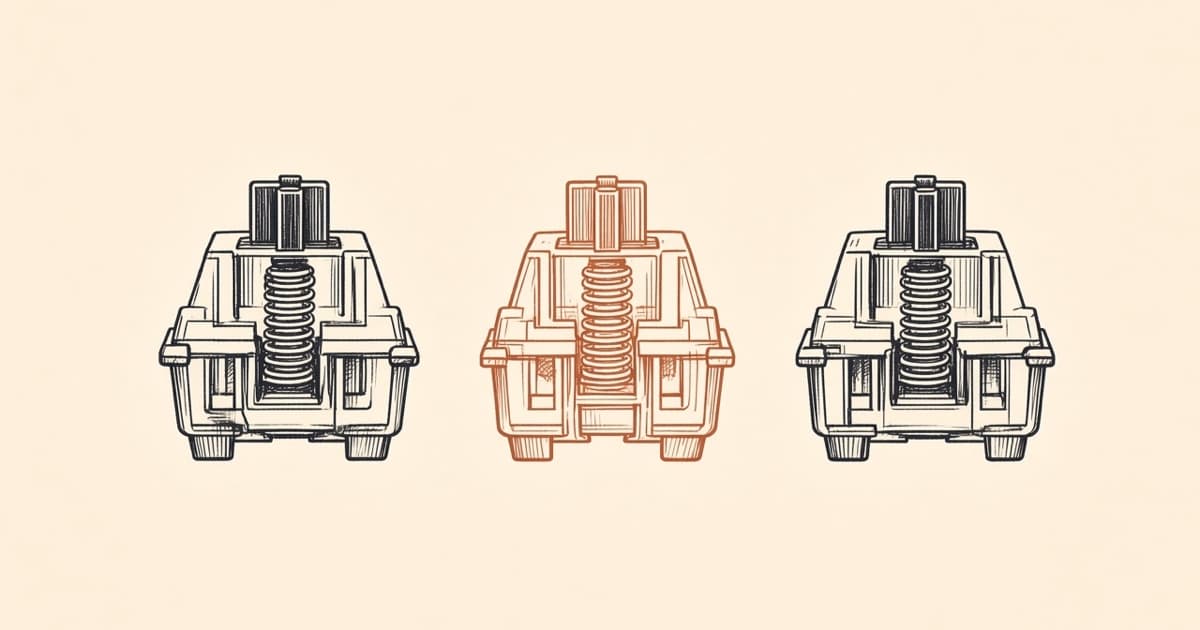
@suryadathan_A mechanical switch is the mechanism under each key. Red, brown, and blue are a shorthand for how that mechanism feels and how loud it is. The shorthand comes from Cherry's MX colors, and other brands borrow it. Two switches called "red" can still differ in force and travel, so the color is a starting point and the maker's current sheet is the decision.
If you type for a long stretch, the switch is what your fingers meet for the whole session. Feel matters more than a brand story. This is the switch half of the series. The size guide covers which keys you are willing to give up.
Red, brown, and blue
| Red | Brown | Blue | |
|---|---|---|---|
| Feel | Linear, no bump | Tactile bump, no click | Tactile bump and a click |
| Sound | Quiet | Quiet | Loud |
| Fits | Games and shared rooms | Mixed typing and games | Typists who want a click on every key |
| Tradeoff | Easy to press a key you did not mean | Less confirmation than a click | Too loud for most offices |
Red is linear. The key goes down and comes up, with no bump and no click. It is the quiet option, which is why people pick it for an office or a late-night room. It is also easy to activate a key you only brushed, because nothing tells your finger the press has happened until the key bottoms out. People who play games often like the even travel. People who want a confirmation on each letter often do not.
Blue is the opposite. There is a bump and an audible click, so you know the key registered. That confirmation is why some typists like it, and why anyone in the next room does not. It is a poor choice on a shared desk. It is also a bit more work per key than a light linear switch.
Brown is tactile and quiet. There is a bump, and there is no click. It is the usual choice when you type and you also play games. It is not a quieter blue. If a listing calls brown clicky, the listing is using the word loosely.
How to pick one
Decide from the room, then from the feedback.
Shared desk, thin walls, or a late night: red. Add brown if you keep missing the moment the key fires.
You type more than you play, and you want to feel the actuation: brown.
You want the click, and nobody else has to hear it: blue.
The listing says silver. That is usually a linear switch made to actuate earlier in the press, sold for games. Read the sheet before you treat it as a typing switch.
Try three switches on one board in a shop if you can. The first five minutes of a click feel better than the fifth evening. A description will not tell you whether you like the bump.
Other brands use the same words
Razer sells its own set. Green is the clicky one, Yellow is a quiet linear, Orange is tactile rather than linear. Those names are on the Razer switch page. Royal Kludge and plenty of others publish Red, Brown, and Blue lines too, sometimes with an extra color for a shorter travel or a heavier spring. Those specs change by batch. Use the color as a hint, then check the force and a sound sample from the maker you are actually buying.
A second pass, if you want it before you order:
The right switch is the one you will still type on in a month. A loud switch you resent will not make you faster. A quiet one you trust will.
The switch is what your fingers meet for a chapter. People often start that chapter on Alice in Wonderland or The Jungle Book. A file you already own can be practiced the same way: type your own book.
FAQ
Which keyboard switch is best for typing?
Brown if you want a quiet bump on each key. Red if the room is shared and you want linear, silent travel. Blue if you want an audible click and nobody else has to hear it.
Are red switches good for typing?
Red is quiet and linear, which suits an office or a late night. Nothing tells your finger the key has fired until it bottoms out, so it is easy to brush a letter you did not mean. Add brown if you keep missing that moment.
Will a new switch make me type faster?
Feel matters more than the brand name. A loud switch you resent will not make you faster. A quiet one you trust will, because you will still be typing on it in a month.